
What Is Dental Bone Grafting?
Bone grafting is a procedure that rebuilds or augments jawbone volume in areas where bone has been lost due to tooth extraction, gum disease, or natural resorption. Adequate bone density is essential for successful dental implant placement, and a bone graft provides the stable foundation your implants need to integrate and function properly.
At West Chester Family Dentistry, we perform bone grafting procedures using advanced materials and techniques to maximize graft success and minimize recovery time. Whether you need socket preservation after an extraction or a larger ridge augmentation before implants, our team has the expertise to help.
- Creates a stable foundation for dental implants
- Preserves jawbone after tooth extraction
- Helps maintain facial structure
- Multiple grafting materials and techniques
- Can be combined with extraction for efficiency
- High success rate with proper care

The Bone Grafting Process
Here is what to expect when you need a bone graft at West Chester Family Dentistry:
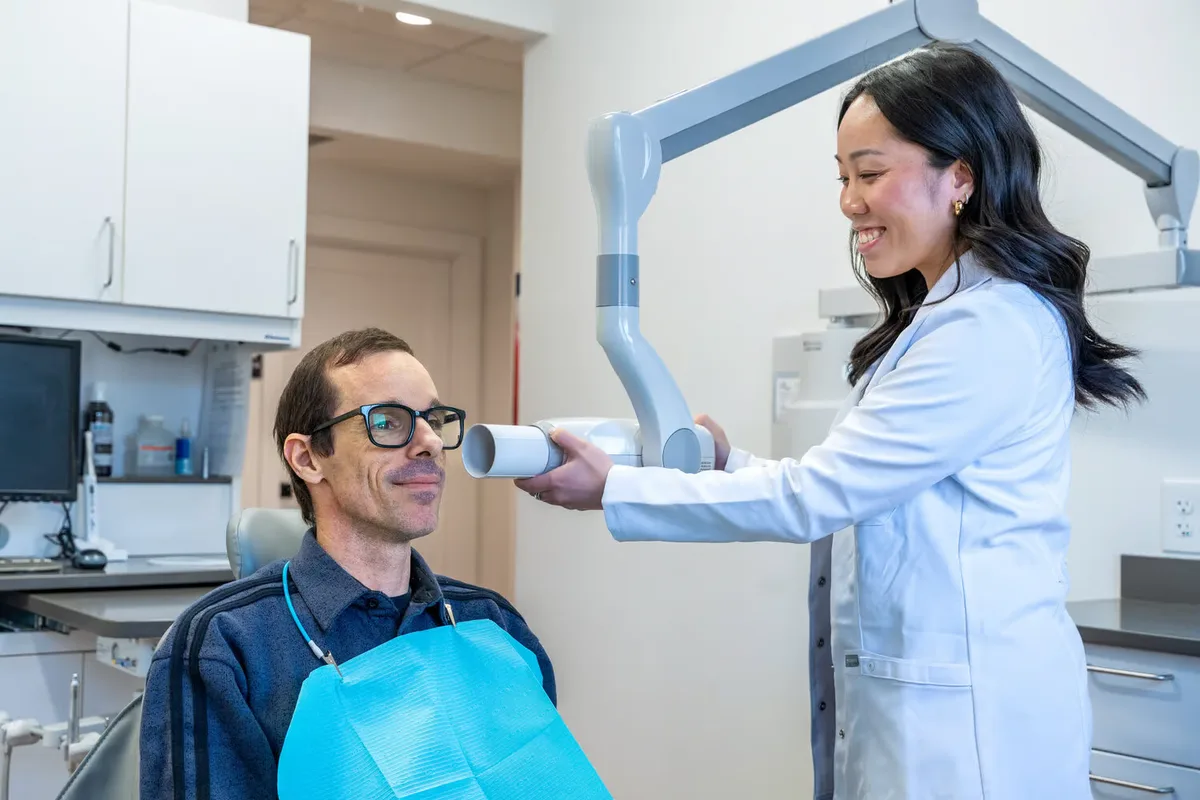
- Your dentist evaluates your jawbone with 3D imaging to determine the type and extent of grafting needed.
- The graft material is placed at the treatment site under local anesthesia with optional sedation.
- The site is closed and left to heal for three to six months while the graft integrates with your natural bone.
- Follow-up imaging confirms the graft has matured and the site is ready for implant placement.
Why Bone Grafting Is Important
After a tooth is lost or extracted, the jawbone in that area begins to shrink. Without the stimulation that a tooth root provides, the bone gradually resorbs, which can compromise the foundation for future implants, alter your facial appearance, and affect the fit of dentures.
Bone grafting halts this process and rebuilds the bone, creating the volume and density needed for a successful implant. When performed at the time of extraction (socket preservation), it can prevent bone loss before it starts, simplifying future implant treatment.
Types of Bone Grafts
We offer several grafting approaches depending on your needs:
Socket Preservation
Graft placed immediately after extraction to prevent bone loss at the extraction site.
Ridge Augmentation
Rebuilds the width or height of the jawbone ridge for implant placement.
Sinus Lift
Adds bone below the sinus cavity to create space for upper jaw implants.
Bone Grafting Cost and Coverage
The cost of bone grafting depends on the type of graft, the size of the area being treated, and the materials used. Many dental insurance plans cover bone grafting when it is medically necessary for implant treatment. Our team will verify your benefits and provide a detailed cost estimate.
We offer financing options to help make your treatment plan affordable. Call 513-755-2118 to schedule your bone grafting consultation.

Frequently Asked Questions About Bone Grafting
Bone grafts typically require three to six months to integrate and mature before implant placement. Your dentist will monitor healing with periodic imaging and determine the right timeline for the next step in your treatment.
The procedure is performed under local anesthesia with sedation options available. Most patients experience mild soreness and swelling for a few days afterward, manageable with over-the-counter or prescribed pain medication.
We use several types of graft material depending on your needs: your own bone (autograft), donor bone (allograft), animal-derived bone (xenograft), or synthetic bone substitutes. Your dentist will recommend the best option for your situation.
Yes. Socket preservation bone grafting is often performed immediately after a tooth extraction to prevent bone loss and maintain the site for a future implant. This is one of the most common and effective uses of bone grafting.
Your dentist will evaluate your jawbone with 3D imaging during your implant consultation. If there is insufficient bone volume to support an implant, a bone graft will be recommended as part of your treatment plan.
Dental bone grafting has a high success rate, typically above 90 percent. Following your dentist post-operative instructions and attending follow-up appointments are important for the best outcome.